
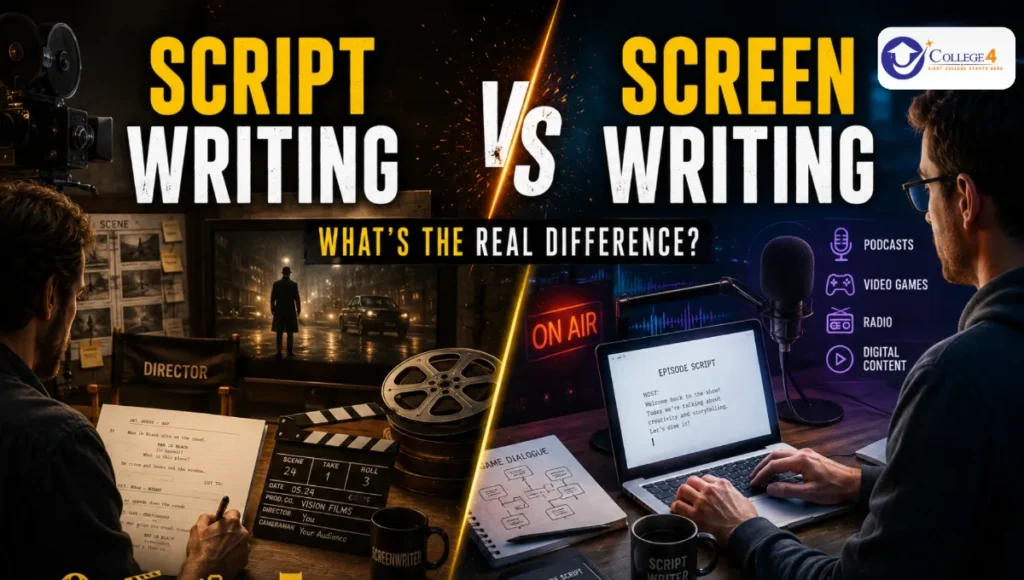
The world of storytelling has changed dramatically over the years. Today, stories are not only told through books and novels but also through films, web series, television shows, video games, advertisements, podcasts, and digital content. Behind every successful visual story is a well-crafted script. This is where terms like scriptwriting and screenwriting become important. Many people use these words interchangeably, but they are not exactly the same.
If you are planning to enter the film, television, or media industry, understanding the difference between scriptwriting and screenwriting is essential. Both fields involve storytelling, character creation, dialogue writing, and structuring narratives, but their purpose, format, and execution can differ depending on the medium. While screenwriting focuses mainly on film and television, scriptwriting has a broader scope that includes multiple entertainment and communication platforms.
In this article, we will explore what scriptwriting and screenwriting mean, how they differ, what skills are needed in both fields, and why they remain important in today’s entertainment industry.
What is Screenwriting?
Screenwriting is the process of writing scripts specifically for visual media such as movies, television series, web shows, and streaming platforms. A screenwriter creates the complete blueprint of a film or visual production before shooting begins. This includes the storyline, dialogues, scene descriptions, character actions, emotional tone, and pacing of the story.
A screenplay is designed to help directors, actors, cinematographers, and production teams understand how the story should appear on screen. Unlike novels, screenplays do not rely on lengthy explanations or internal thoughts. Instead, they focus on visual storytelling. The audience should understand emotions and situations through actions, expressions, camera movement, and dialogue rather than detailed narration.
For example, instead of writing that a character is sad, a screenwriter may describe the character sitting silently in a dark room while avoiding eye contact. This “show, don’t tell” approach is one of the most important elements of screenwriting.
Modern screenwriting is highly structured. Most films follow a three-act format that includes the setup, confrontation, and resolution. Screenwriters must carefully balance pacing, emotional development, and dramatic tension to keep viewers engaged throughout the story.
What is Scriptwriting?
Scriptwriting is a broader term that refers to writing scripts for different forms of media and communication. It includes screenplays for films, but it also covers scripts for television commercials, radio shows, podcasts, stage plays, YouTube videos, documentaries, animation, video games, and corporate presentations.
A scriptwriter focuses on creating content that can guide performers, narrators, or production teams. Depending on the medium, the writing style and format can vary significantly. A radio script, for instance, depends heavily on dialogue and sound effects because the audience cannot see visuals. A video game script may involve multiple story branches and character interactions depending on player choices.
Because scriptwriting applies to many mediums, scriptwriters often need flexibility and adaptability. They must understand how storytelling changes across platforms and how audiences consume content differently in each format.
In simple terms, every screenplay is a script, but not every script is a screenplay.
The Main Difference Between Screenwriting and Scriptwriting
The biggest difference between screenwriting and scriptwriting lies in the medium they are created for. Screenwriting is specifically connected to films and television, while scriptwriting includes many other forms of storytelling and communication.
Screenwriting focuses heavily on visual storytelling. A screenwriter writes scenes while imagining camera angles, expressions, movements, transitions, and cinematic pacing. The script is built to be translated directly into a visual production.
Scriptwriting, on the other hand, may not always depend on visuals. A scriptwriter working on a podcast or radio show relies more on dialogue, sound design, and narration. Someone writing for video games may need interactive storytelling techniques that allow multiple outcomes.
Another major difference is formatting. Screenplays follow strict industry standards. They include proper scene headings, action lines, character names, and dialogue formatting. Scriptwriting formats can vary depending on the project and platform.
Despite these differences, both professions share the same goal: telling engaging stories that connect emotionally with audiences.
Why Screenwriting Matters in Modern Entertainment
Screenwriting is the foundation of every successful film or series. Even the best actors, directors, and visual effects cannot save a poorly written story. A strong screenplay gives structure to the production and helps every department work together efficiently.
In today’s digital age, the demand for screenwriters has increased rapidly due to streaming platforms, web series, independent films, and online video content. Audiences now expect deeper characters, realistic dialogue, and emotionally powerful stories. This has made professional screenwriting more important than ever.
Good screenwriting also helps productions stay within budget and schedule. Since screenplays describe scenes clearly, production teams can plan shooting locations, costumes, lighting, and camera work more effectively.
Screenwriters are often considered the architects of storytelling because they build the entire emotional and narrative structure before production even begins.
Why Scriptwriting is Equally Important
Scriptwriting plays a major role beyond movies and television. Every advertisement, documentary, educational video, YouTube content piece, and podcast requires a script. Businesses, media companies, educators, and content creators all depend on scriptwriters to communicate ideas clearly and effectively.
In digital marketing and social media, scriptwriting has become one of the most valuable creative skills. Short-form video platforms require engaging scripts that capture attention within seconds. Brands use scriptwriters to create compelling promotional content that informs and entertains viewers simultaneously.
Video games also rely heavily on scriptwriting. Modern games include detailed stories, emotional character arcs, and cinematic experiences that require professional-level writing.
As technology evolves, scriptwriting opportunities continue to expand across industries.
Skills Needed for Successful Screenwriting and Scriptwriting
Both screenwriters and scriptwriters need creativity, imagination, and strong storytelling abilities. However, successful writers also need discipline and technical knowledge.
A good writer understands character development, emotional pacing, dialogue structure, and audience psychology. They know how to create tension, conflict, and satisfying resolutions.
Observation skills are equally important. Writers often draw inspiration from real-life experiences, human behavior, culture, and social issues. The ability to understand emotions and relationships helps writers create relatable characters and realistic situations.
Adaptability is another essential skill, especially for scriptwriters working across different media platforms. Each platform has unique audience expectations, pacing styles, and technical requirements.
Collaboration also plays a major role. Writers often work with directors, producers, editors, actors, and designers to improve the final project.
The Evolution of Writing for Screen and Media
Screenwriting and scriptwriting have evolved significantly over time. Earlier films relied on simple dialogue and straightforward storytelling. Today’s audiences expect layered narratives, realistic characters, and cinematic experiences that feel immersive and emotionally authentic.
The rise of streaming platforms has also transformed storytelling styles. Limited series, binge-worthy dramas, and cinematic web content have created new opportunities for writers worldwide.
At the same time, social media and online platforms have made scriptwriting more accessible. Independent creators can now produce films, podcasts, and web content without large studios. This has opened doors for aspiring writers to showcase their talent globally.
Artificial intelligence and digital tools are also changing the writing process, but human creativity, emotion, and originality remain irreplaceable in storytelling.
Conclusion
Screenwriting and scriptwriting are closely connected creative professions, but they are not identical. Screenwriting focuses specifically on visual storytelling for films and television, while scriptwriting covers a much wider range of media formats, including radio, podcasts, video games, advertisements, and digital content.
Both fields require strong storytelling skills, creativity, technical understanding, and emotional intelligence. Whether writing for the big screen or a short online video, the goal remains the same — to create meaningful stories that capture attention and leave a lasting impact on audiences.
As entertainment and digital media continue to grow, the demand for talented writers is increasing rapidly. For aspiring creators, learning the art of screenwriting and scriptwriting can open doors to exciting opportunities in filmmaking, content creation, advertising, gaming, and beyond.
In the end, every great movie, show, or digital experience begins with one thing: a powerful script.