
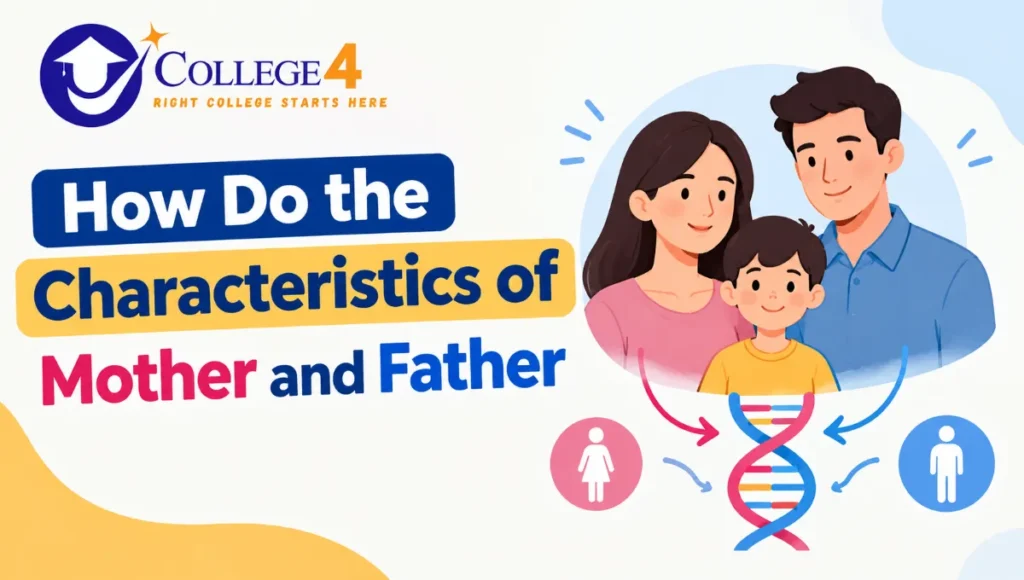
Hint: DNA (Deoxyribonucleic Acid) carries genetic information from one generation to the next. DNA replication helps copy this information during cell division and plays an important role in the transmission of characteristics from parents to offspring.
Answer: The characteristics of the mother and father are transmitted to their children through genes present in DNA. During reproduction, the child receives genetic material from both parents. These genes determine many characteristics, such as eye colour, hair type and other inherited features.
Humans normally have 23 pairs of chromosomes, making a total of 46 chromosomes. Out of these, 22 pairs are called autosomes, while the remaining pair consists of sex chromosomes.
- Autosomes: These 22 pairs carry genes for many body characteristics and functions.
- Sex chromosomes: These chromosomes are involved in sex determination. Typically, females have XX chromosomes and males have XY chromosomes.
The mother usually contributes an X chromosome through the egg, while the father contributes either an X or a Y chromosome through the sperm. If an X-bearing sperm fertilises the egg, the child will typically have XX chromosomes. If a Y-bearing sperm fertilises the egg, the child will typically have XY chromosomes.
Before cells divide, DNA replicates to make a copy of the genetic information. This helps ensure that genetic instructions are passed on to new cells and, through reproduction, from parents to offspring.
Thus, DNA and genes play an important role in transmitting the characteristics of the mother and father to their children.
Read More Also – Abha and Ritu Were Partners: Complete Solution